
fast. open. intuitive.
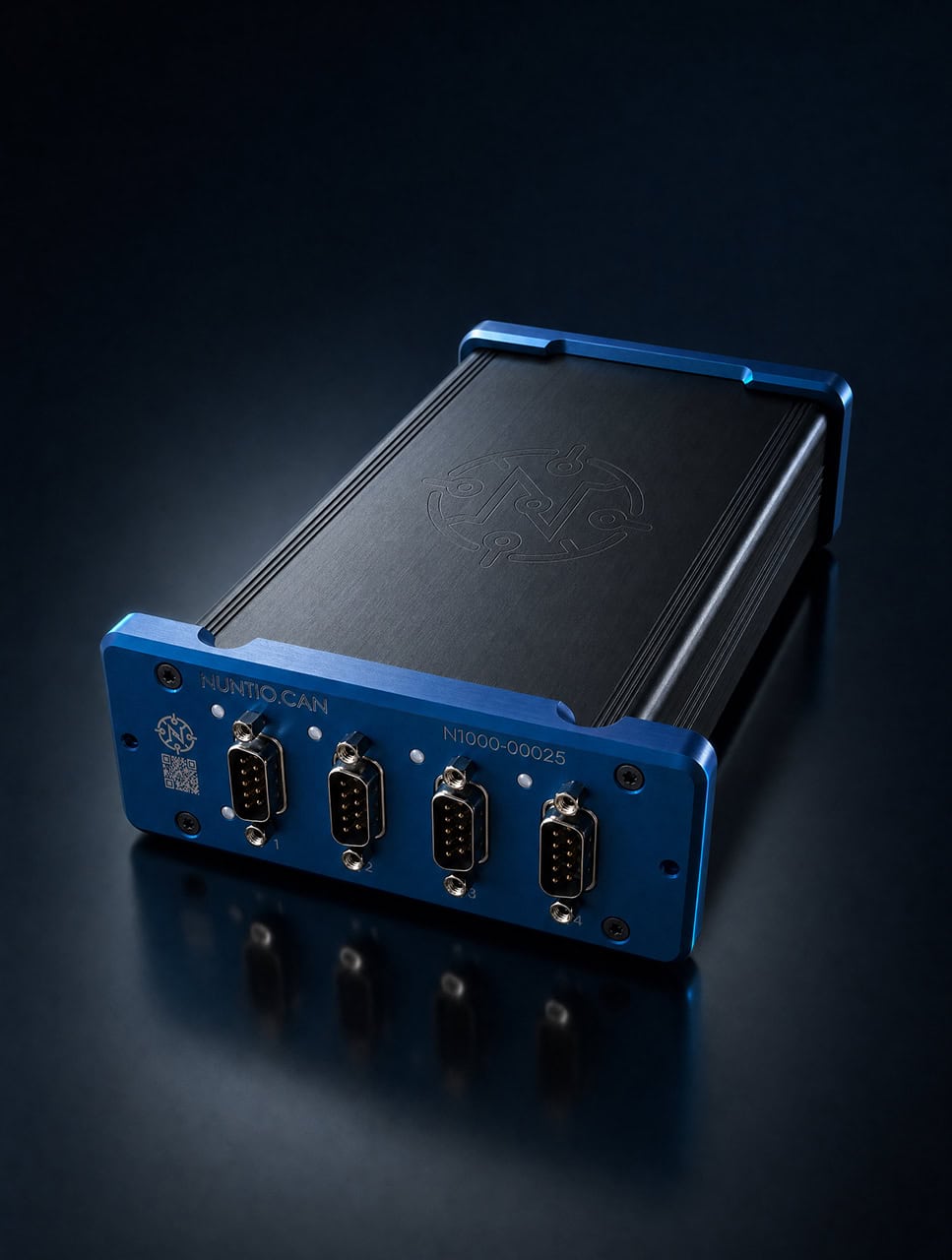
NUNTIO.CAN
New Generation CAN Bus Testing
NUNTIO.CAN simulates, measures, and reacts in real time to actual CAN FD bus traffic — real-time capable, fully operational without a host PC, and designed API-first from the ground up to integrate seamlessly into your automation.
PRODUCT – THE BRAIN
The Intelligence Resides in the Device
NUNTIO is neither a standard CAN adapter nor just a measurement device passing data to an external computer. The difference runs deeper: the powerful software runs directly on the device itself. Simulation and testing tasks are executed right where they occur – on the device under test.
No dedicated host or test PC is required for standalone operation. Having one less computer in the test setup also means one less PC state that could affect your measurement.

Embedded System
Test Device: ECUs, Vehicle Network, Machinery
NUNTIO.CAN
On-device software, operated via browser
- Simulate communication behavior on CAN buses
- Measure real bus traffic
- Test diagnostic functions
- Implement bus gateways
- Operate as a (smart) logger
- Execute intelligent simulations
- React to defined scenarios in the vehicle network
- Operate without a PC via a web interface
- Direct visualization via touch display connection
NUNTIO.CAN
What the device handles
Supported standards: UDS and XCP. Multiple NUNTIO.CAN units can be combined; upcoming family devices are designed to seamlessly collaborate with existing ones.
WORKFLOW
Treat Test Configuration as Code
The decisive question is rarely how many features a test tool offers. It is: how does a test configuration enter the repository, how can a colleague restore it in five minutes, and how smoothly does the test run in the pipeline?

01
Configure
The test configuration resides in open, easily accessible file formats – human-readable, fully documentable, and independent of proprietary tools.
02
Version
Diffable and mergeable: the configuration integrates into your Git repository, undergoing review and history tracking just like any other part of the project.
03
Execute
The test executes independently on the device and is triggered via APIs – manually, scheduled, or directly from the CI/CD pipeline.
STRENGTHS
Benefits in everyday testing
Standalone Operation
The device operates independently. No dedicated host PC in the test setup, no PC system states bleeding into measurements.
Hard Real-Time
Hard real-time requirements are supported. Timing behavior is thus part of the test, not a source of error.
API-centric
NUNTIO is consistently designed around APIs. Every function is accessible via intuitive interfaces.
Automation-friendly
Developed for automated testing processes: The device integrates directly into your existing pipeline, not alongside it.
Open File Formats & Open Standards
Open, easy-to-use file formats and alignment with open standards. Your configurations remain readable and usable over the long term—no vendor lock-in.
Git-friendly
The formats are diffable and mergeable. Test configurations are versioned, reviewed, and tracked just like code.
Easy Integration
Open interfaces make integration into existing environments straightforward—as well as adaptation to project-specific requirements.
Reproducible Setups
Test environments are established in minutes instead of a search for undocumented dependencies. What ran two years ago runs again today.
Modular
Devices can be combined, and the product family is expanding. The setup scales with the project rather than requiring new procurement.
FAQ
What engineers want to know first
Do I need an additional test PC?
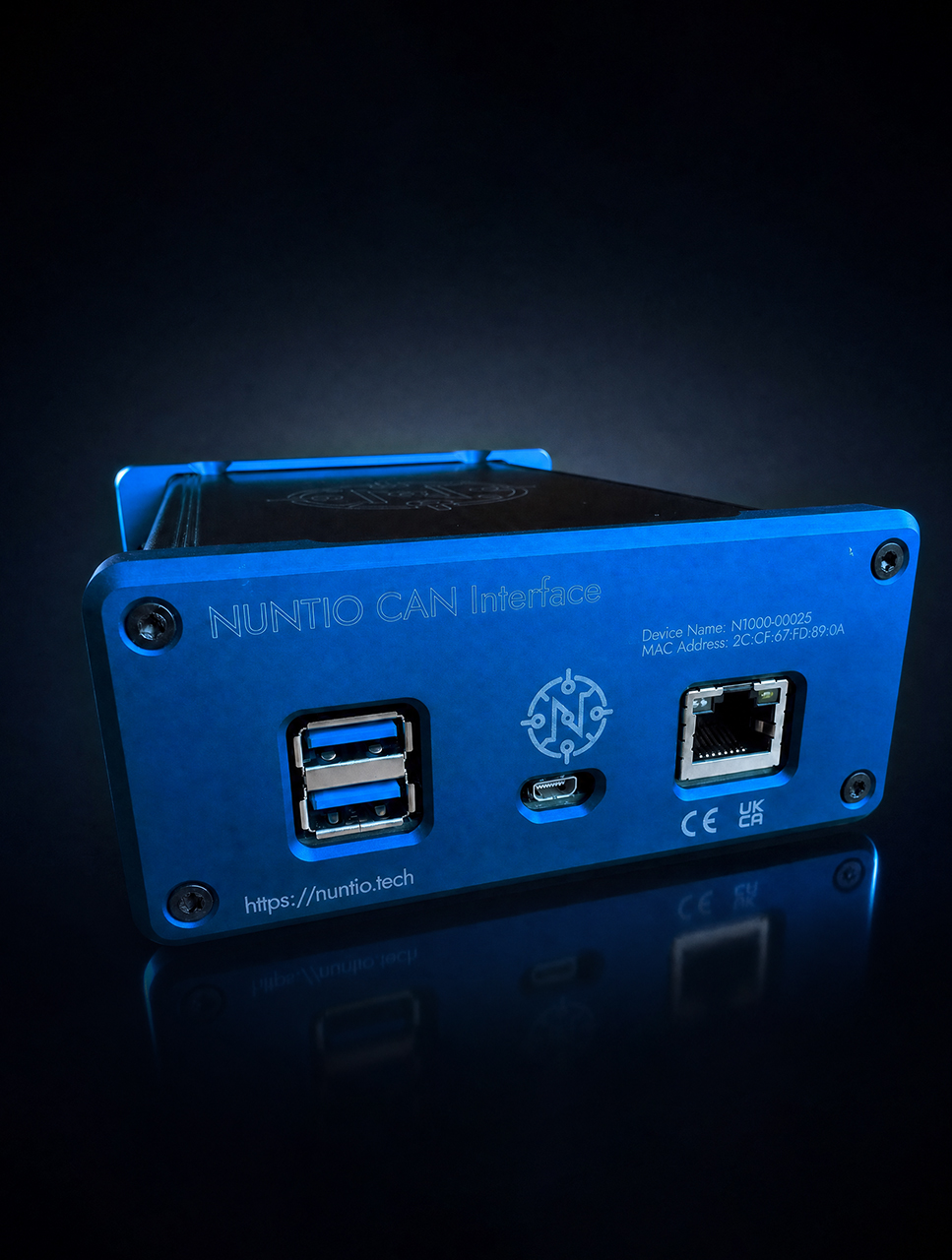
No. NUNTIO.CAN is designed for standalone operation—the high-performance software runs directly on the device. Operation takes place via a browser-based web interface or IDE integrations. A dedicated host or test PC is not required.
Which bus systems and protocols are supported?
NUNTIO.CAN is developed for CAN and CAN FD bus systems. Supported standards include UDS and XCP.
Can NUNTIO be integrated into existing test pipelines?
Yes. The concept is consistently built around APIs and engineered for automated test workflows. Open interfaces streamline integration into existing environments and customization to project-specific requirements.
Are the file formats open?
Yes. NUNTIO relies on open, user-friendly file formats like JSON and open standards. Configurations can be diffed and merged, remaining readable independently of a single vendor—no vendor lock-in.
Can I combine multiple devices?
Yes. Multiple NUNTIO.CAN units can be combined. NUNTIO is designed as a product family: Additional devices are planned and engineered to work seamlessly with existing units.
How does NUNTIO differ from established toolchains?
Not by the length of its feature list, but by its operational approach. Legacy tools tie tests to a dedicated computer and proprietary formats. NUNTIO shifts test intelligence directly into the hardware and keeps configuration and control open—for teams that want to version-control, review, and automate their tests.
Which operating systems are supported?
Linux, Windows, and macOS
How is active bus simulation implemented?
Using Lua-based scripts—quickly and easily.
Can I start with a DBC or ARXML file?
Yes, NUNTIO can generate simulations directly from these files.
Who is behind NUNTIO?
Software Enthusiasts GmbH. NUNTIO is built by engineers who have dealt firsthand with PC-bound test rigs, proprietary formats, and non-reproducible setups. The device is the direct answer to those challenges. We answer technical inquiries directly—without detours through sales filters.